
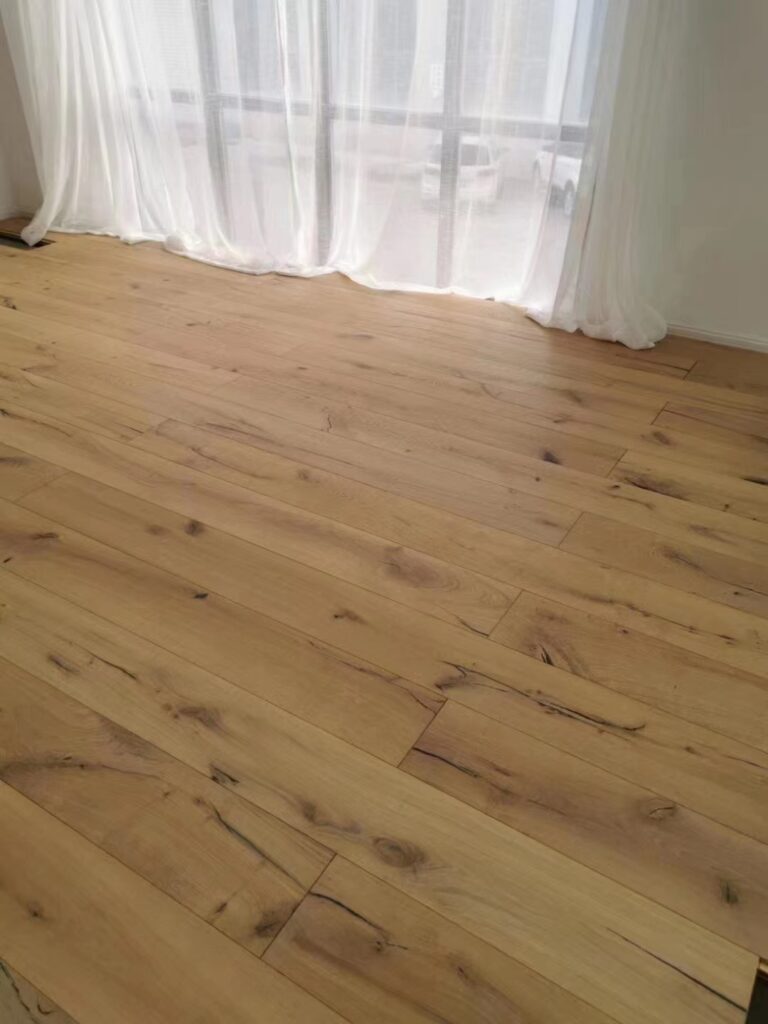
Accurate full-cost calculation is the core foundation of profitable B2B parquet import operations. Many European importers only account for factory pricing while overlooking freight, tax, compliance and incidental charges, leading to distorted profit margins and incorrect local retail pricing. As a professional custom flooring manufacturer with more than 15 years of export experience, Remettfloor ships over 70,000 square meters of engineered wood flooring annually, cooperating with more than 400 long-term clients including UK and German government suppliers and Australian hotel contractors. Our product series covers two-layer pine core, three-layer poplar core and multilayer eucalyptus parquet with hardwood top layers ranging from 1.2mm to 6mm. We provide systematic cost breakdown logic, standard landed cost formulas and calculator usage guidance tailored to custom parquet, helping B2B buyers precisely budget MOQ, optimize container load and avoid unexpected expenditure.
Drawing from decades of cross-border flooring logistics data and widespread industry operational experience, we’ve compiled ten core practical takeaways to guide your full parquet import cost calculation. These actionable insights cover cost composition, landed cost formulas, hidden expense identification and calculator application, supporting you to build complete import budget models.
Table of Contents
- What cost components should I include in parquet import budgets?
- How do I calculate landed costs for parquet flooring imports?
- What hidden costs often surprise first-time parquet importers?
- How can I use cost calculators for parquet imports?
1. What cost components should I include in parquet import budgets?
A complete parquet import budget must integrate four major cost modules: supplier-side expenditure, cross-border logistics fees, EU customs & compliance charges, and post-arrival operational costs. Missing any category will cause budget deviations and erode profit space for European B2B businesses.
First, supplier direct costs: This is the base expenditure including unit pricing of custom parquet, mould and laser cutting fees for bespoke patterns, customized private label packaging charges, and sample production expenses. Remettfloor provides clear itemized quotations separating standard flooring costs and personalized customization fees to facilitate client budget statistics. The calculation benchmark is total MOQ multiplied by unit timber price plus one-time custom development charges.
Second, full logistics costs covering domestic China transport, ocean freight, cargo insurance and destination inland delivery. For FCL parquet shipments, the total container rate includes basic sea fare, BAF fuel surcharge and THC terminal handling fees. LCL cargo is charged by the larger value of volume or weight. Marine insurance fees are calculated based on 110% of cargo declared value, and final trucking fees from European ports to warehouses also need to be reserved in advance.
Third, EU customs and compliance expenses: Mandatory import duty based on parquet HS code, country-specific VAT, phytosanitary certification charges, EUDR traceability document fees, and inspection fees triggered by physical customs checks. Different European countries set differentiated tariff rates for engineered timber flooring, which must be counted separately according to destination markets.
Fourth, post-arrival operational costs: Warehouse storage fees for palletized parquet, indoor acclimatization management costs, sorting labor fees, and amortized after-sales loss reserves for damaged planks during transit. Long-term inventory storage will generate continuous rental expenditure, which should be allocated to the unit cost of each batch of custom parquet.
2. How do I calculate landed costs for parquet flooring imports?
Landed cost represents the complete expenditure of each square meter of parquet delivered to your European warehouse, the core indicator for B2B buyers to set wholesale prices. There is a unified universal calculation formula suitable for all engineered wood flooring and laser-cut custom parquet orders.
Standard Total Landed Cost Formula: Total Landed Cost = Total Supplier Expense + All Sea & Land Logistics Fees + Customs Duty + Import VAT + Compliance Certification Fees + Port Handling Charges + Post-Arrival Storage & Labor Fees Unit Landed Cost = Total Landed Cost ÷ Total Imported Square Meters of Parquet
Calculation breakdown steps:
- Sum all supplier invoices, including bulk parquet, custom packaging and pattern mould costs to get total product expenditure;
- Aggregate full logistics fees from factory to European warehouse: domestic trucking, ocean freight, insurance, destination drayage;
- Compute taxable customs value (usually CIF value), multiply by import duty rate to get duty payable; calculate VAT on the sum of CIF value plus duty;
- Add fixed compliance costs such as phytosanitary certificates and broker service fees;
- Include one-time port inspection charges and short-term warehouse rental fees after cargo arrival;
- Divide the grand total by total square meters to acquire accurate unit landed cost for pricing reference.
When calculating mixed-SKU parquet shipments containing multiple timber thicknesses and laser patterns, separate statistics for each specification are required to avoid average pricing distorting high-grade bespoke parquet’s actual cost. Remett supplies complete packing lists with total volume, gross weight and cargo value to support clients’ precise landed cost computation.
3. What hidden costs often surprise first-time parquet importers?
Many novice B2B buyers only calculate visible product and ocean freight fees, ignoring multiple hidden charges that may increase total import expenditure by 8%–15%. These unplanned expenses frequently appear in port, customs and post-arrival links.
- Demurrage & detention fees: If palletized parquet exceeds the free storage period at European terminals, daily charges per container apply, which can accumulate rapidly over one week of customs delays.
- Customs inspection surcharges: Random physical container checks generate labor and equipment fees; re-inspection triggered by inconsistent documents will produce repeated administrative costs.
- Seasonal freight surcharges: Pre-Christmas and pre-Chinese New Year peak periods add heavy peak season surcharges not listed in initial forwarder quotations.
- EUDR supplementary file fees: Additional third-party traceability audit costs if timber source records are incomplete at customs inspection.
- ISPM pallet replacement fees: Damaged export pallets at European ports need reworking, generating extra handling expenses.
- Transit damage write-off reserve: Partial broken or moldy parquet cannot be sold, forming invisible inventory losses unaccounted for in early budgets.
- Currency exchange fluctuation losses: Long payment cycles between order placement and cargo arrival create exchange rate gaps increasing actual expenditure.
- Customs broker overtime fees for after-hours clearance during port peak periods.
Experienced long-term cooperative clients of Remettfloor can obtain pre-warning of these hidden costs during quotation stage, reserving corresponding budget space in advance.
4. How can I use cost calculators for parquet imports?
Specialized import cost calculators simplify complex manual arithmetic and effectively reduce calculation errors for mixed-spec parquet FCL/LCL shipments. B2B importers can adopt three tiers of calculation tools according to order scale.
- Basic spreadsheet calculator (suitable for small & medium MOQ): Build an Excel table with pre-set formula modules, filling in parquet square meterage, unit price, container type, freight rate, EU duty and VAT rate. The sheet automatically computes total cost and unit landed cost. Remettfloor shares editable cost calculation templates for all cooperative clients.
- Professional freight platform calculators (suitable for regular bulk orders): Tools such as FreightAmigo and SeaRates support automatic calculation of sea freight, THC and surcharges after inputting origin port, destination and cargo volume. Import duty lookup functions for timber HS codes are embedded to accelerate budget making.
- Customized one-stop calculation (for large government & hotel project MOQs): Submit full order data including parquet specifications, pallet dimensions and target European country to Remettfloor’s logistics team; our staff generate a complete cost breakdown sheet covering all visible and hidden charges for client reference.
Key calculator usage tips: Fill in actual gross weight and pallet CBM instead of estimated data; select accurate HS code for engineered parquet to avoid wrong duty calculation; add 10% contingency buffer for hidden incidental costs in the final budget result to cope with unpredictable port and customs fees.
Conclusion
Complete, accurate total cost calculation is an indispensable core capability for European B2B enterprises engaged in custom parquet and engineered wood flooring imports from China. Systematic sorting of all cost modules, standardized landed cost formulas, full awareness of hidden expenditure and rational utilization of import calculators jointly guarantee reliable budget control, stable MOQ planning and scientific local market pricing strategies.
Partnering with an experienced manufacturer like Remettfloor brings powerful cost control support for importers. With 15+ years of cross-border export experience, a 20,000 sqm raw material warehouse and annual shipment volume exceeding 70,000 square meters, we provide itemized quotations, complete cargo parameter data and editable cost calculation templates for every client. Our logistics team also offers professional cost analysis suggestions based on Germany, France, UK and other European national tariff rules, helping private-label retailers, hotel project contractors and government procurement suppliers accurately lock import profit margins amid fierce global parquet market competition.
Core Practical Takeaways for Parquet Import Cost Calculation
- Full landed cost must include product, logistics, customs compliance and post-arrival four major cost modules.
- Standard landed cost formula divides total full expenditure by total parquet square meters for unit cost benchmarking.
- Hidden port detention and customs inspection fees can add up to 15% of total parquet import spending.
- Parquet marine insurance is valued at 110% of declared cargo value for premium calculation.
- FCL sea freight offers lower per-square-meter logistics cost compared with LCL parquet shipments.
- Complete packing list data from manufacturers improves calculator computation accuracy significantly.
- Different EU member states apply differentiated import VAT and duty rates for engineered timber flooring.
- Excel spreadsheets are the most flexible cost calculators for small and medium parquet MOQ orders.
- A 10% contingency budget buffer covers unforeseen hidden import charges.
- Mixed-SKU parquet shipments require separate cost calculation for each flooring specification.