
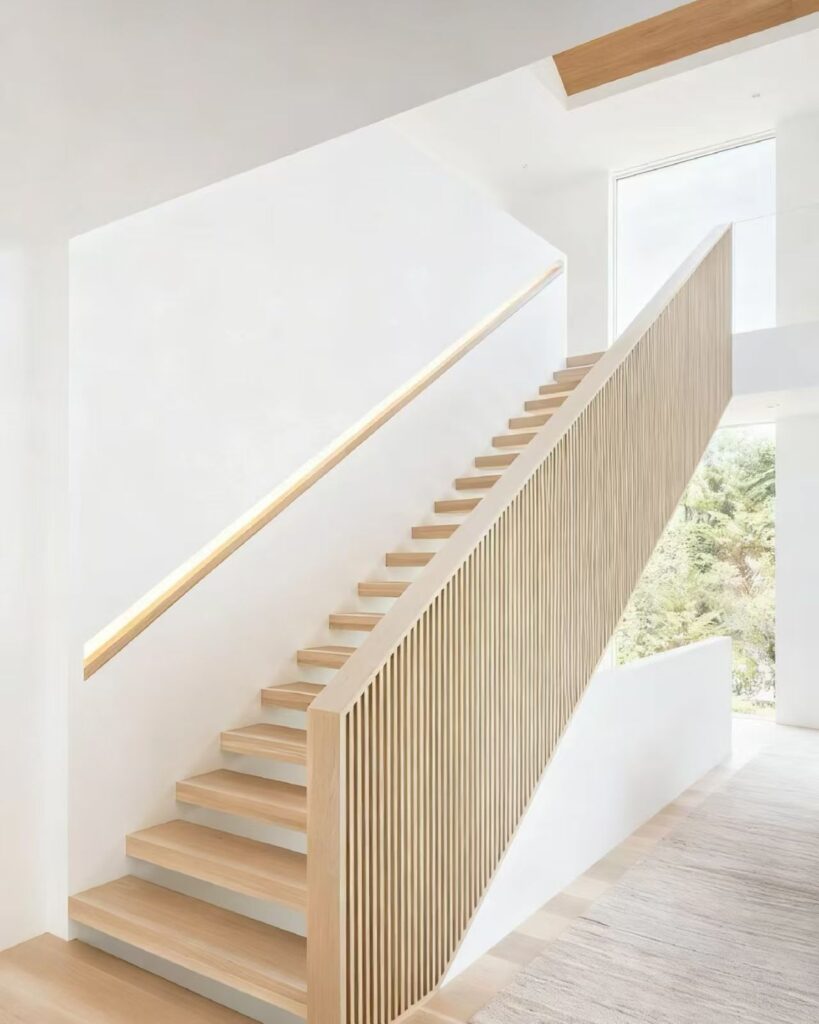
Implementing comprehensive dimensional stability testing ensures imported parquet maintains its structural integrity and appearance despite environmental changes, protecting your investment against movement-related failures.
Dimensional stability represents a critical performance characteristic for parquet flooring, particularly when products are transitioning between different climate zones from manufacturing in China to service in European markets. For B2B buyers, establishing robust testing protocols verifies that parquet products will withstand the specific environmental conditions of their target markets without developing gaps, cupping, crowning, or other movement-related issues. Understanding both standardized testing methodologies and practical assessment approaches enables importers to make informed decisions and mitigate risks associated with dimensional instability.
The complex relationship between wood’s hygroscopic nature and environmental conditions requires sophisticated testing approaches that simulate real-world scenarios while providing measurable, reproducible results. By implementing systematic dimensional stability verification throughout the procurement process, buyers can confidently specify parquet products that will perform reliably in their intended applications, whether in humidity-controlled commercial environments or seasonal residential settings.
Table of Contents
1.What dimensional stability standards apply to European parquet?
2.How do temperature changes affect parquet dimensional stability?
3.Can suppliers provide dimensional stability test reports?
4.How does wood species affect parquet dimensional stability?
What dimensional stability standards apply to European parquet?
European markets employ specific standardized testing methodologies to evaluate parquet dimensional stability, providing consistent benchmarks for product performance comparison and compliance verification.
International Standard Framework
The European standardization system includes several key protocols for assessing how parquet responds to environmental variations. EN 1910 specifies methods for determining dimensional changes in parquet under varying humidity conditions, measuring width, length, and thickness variations after exposure to precisely controlled humidity cycles. EN 13226 establishes testing parameters for solid wood parquet elements, including dimensional stability requirements for different wood species and construction types. EN 14342 provides comprehensive testing frameworks for wood flooring, incorporating dimensional stability protocols that simulate real-world conditions from manufacturing through installation and service life. ISO 24334 offers international testing methodology for determining dimensional stability following humidity variation, creating globally comparable data sets. Additionally, country-specific adaptations sometimes modify these standards to address regional climate considerations, particularly in Nordic countries with extreme seasonal variations and Mediterranean regions with consistently high humidity levels.
Testing Methodology Implementation
Proper implementation of dimensional stability testing requires precise environmental controls and measurement protocols. Conditioning phases precede testing, bringing samples to equilibrium moisture content under standardized conditions (typically 20°C ± 2°C and 65% ± 5% relative humidity) before testing commences. Cyclic testing subjects samples to repeated humidity variations between low (30% RH) and high (85% RH) extremes while maintaining constant temperature, simulating seasonal changes over compressed timeframes. Steady-state testing exposes samples to constant high humidity conditions (90% RH) for extended periods, assessing long-term performance in challenging environments. Measurement protocols employ precision instruments with accuracy to 0.1mm for dimensional changes and 0.1% for moisture content calculations, ensuring data reliability. Remett Floor’s quality assurance laboratory maintains full accreditation for standardized dimensional stability testing, providing clients with certified test reports that validate product performance under European environmental conditions.
How do temperature changes affect parquet dimensional stability?
Temperature variations influence parquet dimensional stability both directly through thermal expansion and indirectly by affecting relative humidity levels and consequently wood’s moisture content.
Thermal Impact Mechanisms
Multiple temperature-related factors collectively influence how parquet dimensions respond to environmental changes. Direct thermal expansion causes minute dimensional changes as wood cells expand with increasing temperature and contract with decreasing temperature, though this effect is significantly smaller than moisture-related movement. Relative humidity relationship with temperature means that as temperature increases without adding moisture, relative humidity decreases, potentially causing wood to lose moisture and shrink. Heating system effects during European winters create complex scenarios where increased temperature coupled with decreased humidity creates challenging conditions for dimensional stability. Radiant heating compatibility requires special consideration as the heat source directly impacts the flooring material, potentially creating temperature gradients across the floor surface. Seasonal transition periods in spring and fall create particularly challenging conditions as buildings transition between heating and cooling modes, often with significant humidity fluctuations.
Practical Temperature Management
Understanding temperature impacts enables development of effective stability strategies. Thermal mass utilization in building design helps moderate temperature fluctuations, creating more stable environments that minimize dimensional movement. Transition zone management addresses areas where flooring connects to exterior elements or different flooring types, accommodating differential movement. Installation timing consideration schedules flooring installation during moderate seasonal periods when temperature and humidity are closest to annual averages. HVAC system coordination ensures environmental control systems are operational before, during, and after installation to maintain stable conditions. Expansion space design incorporates adequate perimeter gaps and transition profiles that accommodate normal thermal and moisture-related movement. Remett Floor engineers products with specific consideration for temperature variations in target markets, ensuring our parquet maintains dimensional stability across expected temperature ranges in European installations.
Can suppliers provide dimensional stability test reports?
Reputable Chinese manufacturers should provide comprehensive dimensional stability test documentation, though the depth and credibility of these reports vary significantly based on testing methodologies and verification protocols.
Test Report Components and Verification
Authentic dimensional stability test reports contain specific elements that validate testing thoroughness and result credibility. Laboratory accreditation information confirms testing facility qualifications, with preferred recognition including ISO/IEC 17025 certification and specific accreditation for construction product testing. Testing standard compliance clearly references the exact standard versions and methodologies employed, ensuring appropriate protocols for the specific product type and target market. Sample description completeness details product construction, wood species, surface treatments, and production batch information, enabling proper result interpretation and reproduction. Testing parameter documentation specifies temperature, humidity levels, exposure durations, and measurement intervals with precise numerical values rather than generalized descriptions. Result presentation includes both quantitative data (dimensional change percentages, moisture content measurements) and qualitative observations (surface checking, joint integrity, coating performance) with photographic documentation where appropriate.
Practical Evaluation of Test Reports
Critical assessment of provided test reports ensures their relevance and reliability for specific procurement decisions. Testing recency considerations favor reports dated within the previous 12 months, as manufacturing processes and material sources may change over time. Product configuration alignment verifies that tested samples match the specific construction, thickness, and treatment options being procured, not merely similar product lines. Statistical significance evaluation examines sample sizes, testing repetitions, and result consistency, with robust testing typically involving multiple samples from different production batches. Failure mode documentation in comprehensive reports includes not just passing results but detailed descriptions of how and when products failed under extreme conditions, providing valuable performance boundary information. Remett Floor maintains an extensive database of dimensional stability test reports across our product range, with documentation updated quarterly and available for client review during the specification process.
How does wood species affect parquet dimensional stability?
Different wood species demonstrate significantly varying dimensional stability characteristics due to their unique anatomical structures, density, and natural chemical composition.
Species Stability Characteristics
Wood species vary dramatically in their response to environmental changes, with stability differences stemming from fundamental material properties. Grain direction influence means quarter-sawn lumber demonstrates significantly better stability than plain-sawn material regardless of species, with quarter-sawn wood typically showing 50-70% less movement across the face. Density relationship shows that generally higher density species tend toward better stability, though this correlation has notable exceptions. Cell structure variations between species create different movement patterns, with diffuse-porous woods typically demonstrating more uniform movement than ring-porous species. Natural extractives content in some species like teak and oak provides inherent stability advantages through natural oils and chemicals that moderate moisture exchange. Movement coefficient ranges vary significantly between species, with low-movement species like quarter-sawn oak (2.5% total movement) contrasting with high-movement species like solid beech (5.5% total movement) between dry and saturated conditions.
Species Selection Strategies
Strategic wood species selection optimizes dimensional stability for specific applications and environments. Climate compatibility matching pairs species stability characteristics with destination environment, selecting naturally stable species for challenging environments and accepting higher movement species for stable interior conditions. Engineering enhancements utilize cross-ply construction to overcome inherent species instability, enabling use of aesthetically desirable but naturally unstable species in demanding applications. Grain orientation optimization specifies quarter-sawn material for maximum stability in critical applications despite typically higher material costs. Species blending approaches combine stable substrate species with decorative face veneers of less stable but aesthetically preferred species. Treatment applications like thermal modification can significantly improve stability of naturally less stable species, expanding design possibilities while maintaining performance. Remett Floor’s species selection guidance helps clients balance aesthetic preferences with stability requirements, recommending optimal species and construction options based on specific project parameters and environmental conditions.
Conclusion
Implementing comprehensive dimensional stability testing for Chinese parquet imports provides essential verification that products will perform reliably in European environmental conditions. The most effective testing strategies combine standardized laboratory protocols with practical assessments that reflect specific project requirements and installation environments. By understanding applicable standards, recognizing temperature impacts, critically evaluating test reports, and selecting appropriate wood species, B2B buyers can significantly reduce movement-related failure risks while ensuring long-term customer satisfaction with imported parquet flooring.
Remett Floor’s commitment to dimensional stability begins with wood selection and continues through manufacturing, testing, and technical support, providing clients with products engineered specifically for European climate conditions. Our transparent testing documentation and technical guidance help clients make informed specification decisions that balance performance requirements with budget considerations.
Are you concerned about dimensional stability in your next parquet project and seeking a supplier with verified testing protocols and species-specific engineering expertise?