


The global architectural and design industry is increasingly prioritizing sustainability, driving B2B buyers to seek eco-friendly materials like reclaimed wood parquet flooring. Chinese manufacturing hubs have responded with advanced capabilities, offering a robust supply of custom parquet that marries environmental responsibility with exceptional quality. At Remett Floor, we empower our B2B partners to navigate this landscape, providing tailored reclaimed wood solutions that meet rigorous commercial standards and project-specific design requirements.
Reclaimed wood parquet offers a unique narrative of history and character, unavailable in new timber, making it a premium choice for discerning projects. Chinese suppliers have refined their techniques for processing, stabilizing, and crafting these materials into durable, precise flooring. Sourcing this product successfully, however, requires a strategic approach to certification, quality verification, and supplier reliability.
This guide addresses the critical questions B2B professionals face when considering Chinese suppliers for reclaimed wood parquet, providing the insights needed to make confident sourcing decisions.
In this article, you will learn:
The types of reclaimed wood available for custom parquet flooring.
How sourcing reclaimed materials impacts cost and lead times.
The importance of verifiable certifications and how to obtain them.
Essential quality checks to ensure long-lasting performance.
What Reclaimed Wood Options Are Available for Parquet Flooring?
Chinese suppliers offer a diverse portfolio of reclaimed wood, sourced from old barns, factories, railway sleepers, and demolition projects. Species commonly available include dense reclaimed oak, character-rich pine, and durable teak, each offering distinct grains and aging patterns. At Remett Floor, we specialize in guiding B2B clients through these options, providing samples and technical data to ensure the selected wood aligns with the project’s aesthetic and functional vision.
Beyond standard offerings, suppliers can create mixed-species parquet or focus on region-specific timbers to achieve a unique design statement. The availability hinges on the supplier’s sourcing network and inventory. Remett Floor maintains strong relationships with reclaimed material providers, ensuring a consistent and varied flow of quality wood for our custom parquet flooring projects.
A closer examination of the processing reveals the expertise involved. The wood undergoes meticulous stages of de-nailing, insect treatment, kiln-drying, and milling to transform raw, aged timber into precision-engineered parquet. We employ state-of-the-art machinery to achieve tight tolerances and perfect tongue-and-groove systems, ensuring easy installation and a seamless finish for our clients.
How Does Reclaimed Wood Affect Parquet Pricing and Availability?
The pricing for reclaimed wood parquet is typically 20-30% higher than for new wood, reflecting the labor-intensive processes of sourcing, deconstruction, and restoration. Factors such as the wood’s rarity, age, and the complexity of initial processing directly influence the final cost. While this represents a higher initial investment, the long-term value lies in the product’s unparalleled character, durability, and market appeal for sustainable projects.
Availability can be variable compared to standard parquet, as it depends on the successful sourcing of suitable old wood. This can occasionally lead to longer lead times. However, established suppliers like Remett Floor mitigate this risk through diversified sourcing channels and strategic material stockpiling. For large-volume B2B orders, we work proactively to secure supply and provide transparent timelines.
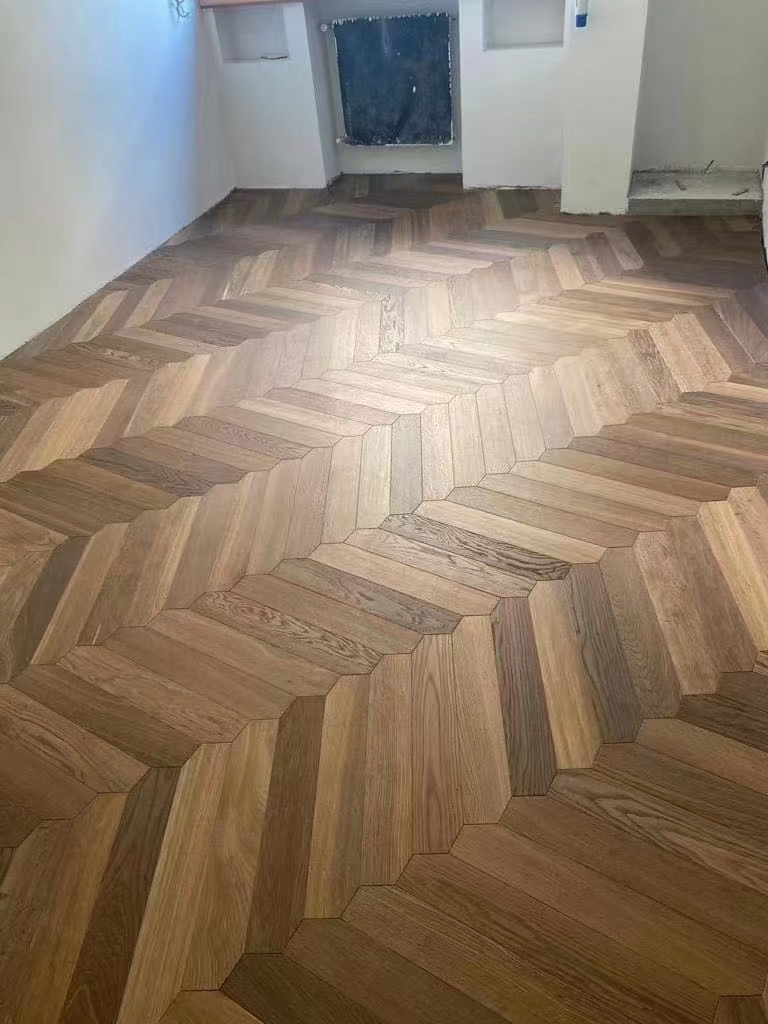
From a procurement perspective, it’s crucial to understand that customization and certification add layers to the cost structure. We help clients balance their budgets by offering solutions like herringbone or chevron patterns that maximize visual impact, or by discussing hybrid options that blend reclaimed elements with new, FSC-certified wood without compromising the overall sustainable aesthetic.
Can Suppliers Provide Reclaimed Wood Certification for Parquet?
Reputable Chinese suppliers absolutely can and should provide relevant certifications. The Forest Stewardship Council (FSC) Reclaimed label is a key certification, verifying that the wood is from post-consumer sources and tracked through a chain of custody. Other relevant credentials may include ISO 14001 for environmental management systems. Remett Floor ensures all necessary documentation is readily available for our B2B partners, facilitating smoother compliance with green building standards.
These certifications are not just paperwork; they are a testament to a supplier’s commitment to ethical and transparent practices. They provide tangible proof against “greenwashing” and are often required for projects targeting LEED or BREEAM accreditation. We maintain an open-book policy, allowing clients to review audit reports and certification details as part of their due diligence.
The verification process involves rigorous third-party audits of the entire supply chain, from the reclamation site to the finished product. At Remett Floor, we have integrated these audit protocols into our standard operating procedures. We recommend that B2B buyers always request current certificates and, for large projects, consider conducting their own or a third-party factory audit to cross-verify claims.
What Are the Quality Considerations for Reclaimed Wood Parquet?
Quality assurance for reclaimed wood parquet focuses on structural integrity and stability. The wood must be thoroughly inspected for deep cracks, rot, or residual metal. Critical metrics like moisture content (typically targeted between 6-8% for interior use in most climates) are non-negotiable. At Remett Floor, our multi-stage QC process includes stringent checks at each production phase, backed by test reports that we share with clients.
Key performance aspects to evaluate include:
Dimensional Accuracy: Ensuring precise sizing for problem-free installation.
Surface Finish: Checking for smoothness and the durability of the coating (e.g., UV-cured oils or lacquers).
Hardness and Wear Resistance: Verifying that the finish can withstand commercial traffic.
To truly de-risk your procurement, assess the supplier’s capability to handle your specific customization, whether it’s a unique finish, a complex pattern, or a specific grade of character marking. Remett Floor combines modern technology with artisan skill to deliver consistent, high-quality results. We stand behind our products with clear warranty terms and encourage pre-shipment inspections to build mutual confidence.
Conclusion
Sourcing reclaimed wood parquet from China is a strategically sound and sustainable choice for B2B buyers, offering a blend of historical beauty and modern performance. Success hinges on partnering with a verified, communicative, and experienced supplier who prioritizes transparency, quality, and certification.
At Remett Floor, we are more than just a manufacturer; we are your strategic partner in sustainable flooring. We invite you to leverage our expertise in custom parquet flooring to bring your most ambitious projects to life. Contact us today to request technical specifications, certification documents, or personalized samples and discover the Remett Floor difference.