
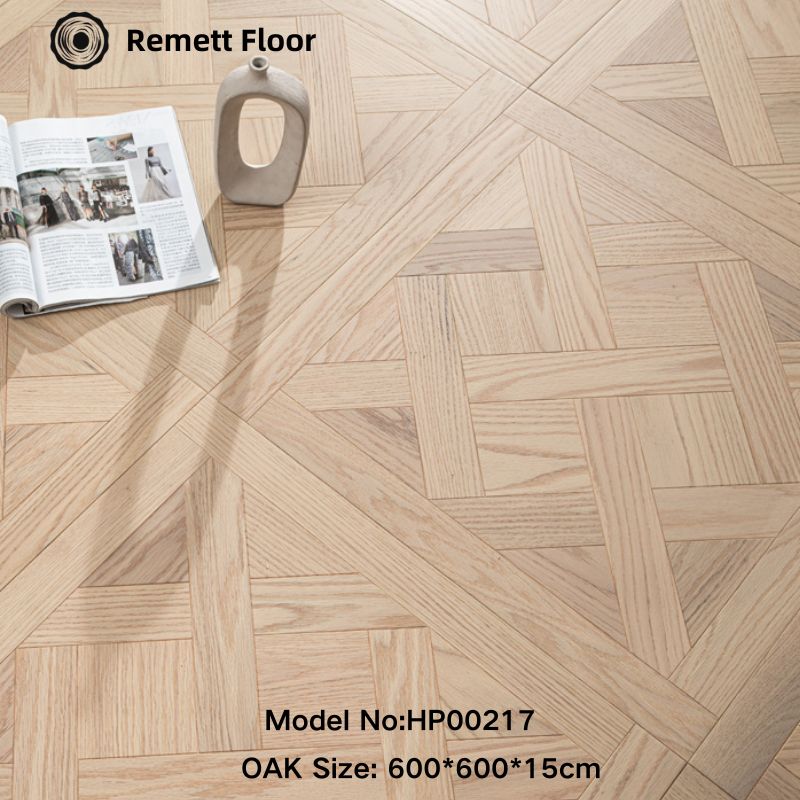
Calculating accurate ROI (Return on Investment) is the core financial benchmark for European B2B distributors, hotel contractors and government suppliers sourcing custom parquet flooring and engineered wood flooring from Chinese manufacturers. Miscalculations of landed costs, profit margins and turnover cycles lead to misjudged MOQ targets, poor container load planning and squeezed wholesale profitability. As a top OEM & ODM custom timber producer with over 15 years of export experience, Remettfloor ships more than 70,000 sqm of engineered parquet yearly and maintains long-term cooperation with 400+ European partners. Our product portfolio includes 2-layer pine core, 3-layer poplar core and multilayer eucalyptus flooring with hardwood veneers ranging from 1.2mm to 6mm, plus bespoke laser-cut parquet patterns. This guide compares China vs European parquet pricing, defines standard industry profit margins, breaks down all import cost variables impacting ROI, and outlines typical investment payback timelines for cross-border timber procurement.
Drawing from decades of cross-border flooring logistics data and widespread industry operational experience, we’ve compiled ten core practical takeaways to guide your parquet import ROI calculation and profitability forecasting. These data-backed insights cover price comparisons, margin benchmarks, cost deductions and payback cycle planning for all timber import projects.
Table of Contents
- How does Chinese parquet pricing compare to European alternatives?
- What’s the typical profit margin for imported parquet flooring?
- How do import costs affect parquet ROI calculations?
- How long does it take to recoup parquet import investments?
1. How does Chinese parquet pricing compare to European alternatives?
Factory pricing gaps between Chinese-made engineered parquet and European domestic manufactured flooring form the primary foundation of positive import ROI. Raw timber access, labor costs and automated production lines in China create consistent cost advantages for B2B buyers, though premium custom laser parquet narrows this price differential slightly. Standard mass-produced 3-layer engineered wood from Remettfloor carries a 35%–55% lower factory FOB cost than equivalent parquet manufactured in Germany, France or Italy. European domestic brands bear high local labor, factory rent and environmental compliance overheads that inflate base unit prices before wholesale markup. Mid-tier custom herringbone and chevron parquet from China holds a 28%–42% price advantage over European equivalents. For ultra-premium Versailles laser-cut custom parquet, the gap reduces to 20%–30% due to shared high raw hardwood costs across global manufacturers. European domestic parquet often includes pre-built brand licensing and showroom overheads embedded into base pricing, while Remettfloor offers ODM/OEM private label production without mandatory brand surcharges, further widening gross ROI potential for importers. Even after adding full ocean freight, EU duty and inland delivery landed costs, China-sourced parquet still delivers 15–30% lower total input cost versus locally manufactured equivalents.
2. What’s the typical profit margin for imported parquet flooring?
Gross and net profit margins vary by product tier, MOQ scale and target customer group, directly shaping final ROI percentages for European B2B importers. Clear margin segmentation helps buyers set realistic sales pricing and forecast investment returns before confirming large container load orders. Budget standard multilayer engineered parquet (mass retail stock) delivers 22%–30% gross margins and 10%–16% net ROI after deducting warehouse, logistics and marketing overheads. These high-volume SKUs rely on large recurring MOQs to offset thin per-unit returns. Mid-range custom chevron/herringbone parquet for hotel renovation projects generates 30%–40% gross profit, with stable net ROI ranging from 17%–25%. Higher unit pricing absorbs fixed import overheads better than budget plank lines. Luxury laser-cut bespoke parquet for high-end residential and government tender projects achieves 40%–52% gross margins and 26%–38% net ROI, representing the highest-return product category in China-Europe timber import portfolios. Importers purchasing small trial MOQs below full 20ft containers see compressed net margins down to 5%–9%, as per-square-meter logistics and administrative overheads surge without volume cost dilution. Annual framework clients of Remettfloor unlock tiered factory discounts that lift baseline margins by an additional 4–8 percentage points.
3. How do import costs affect parquet ROI calculations?
Complete landed cost must be fully incorporated into every ROI formula; omitting any cross-border expense item drastically inflates projected returns and creates financial forecasting errors for B2B parquet buyers. Every cost category directly reduces net profit and final ROI percentage. Base factory FOB price forms the largest single cost line item, while ocean freight, fuel surcharges and THC terminal fees add 8–18% extra expenditure per sqm of parquet. EU import duty (HS code dependent) and standard VAT cut gross profit before calculating final ROI. Hidden recurring overheads often overlooked in basic ROI spreadsheets include customs brokerage fees, phytosanitary & EUDR certification charges, pallet handling, warehouse storage and transit damage write-off reserves. Currency exchange fluctuations also shift total landed costs by 3–7% over long payment cycles, altering calculated ROI results. Custom feature surcharges (wide planks, exclusive laser patterns) raise unit input costs and lower ROI unless matched with corresponding retail price uplifts. Consolidating scattered small MOQs into full FCL container loads cuts per-unit logistics overheads and lifts overall ROI by 6–12 percentage points on identical product lines. Remettfloor provides fully itemized quotation breakdowns separating product, packaging and custom fees, enabling importers to plug accurate cost figures into their ROI calculation templates without manual estimation errors.
4. How long does it take to recoup parquet import investments?
Investment payback (break-even) timelines rely on inventory turnover speed, MOQ volume and end-customer sales channels, which must be factored into long-term ROI forecasting for seasonal parquet import cycles. Fast-moving standard engineered parquet sold to retail flooring shops delivers full investment recoupment within 2–4 months of container arrival, thanks to high monthly sales velocity and consistent restock demand. Mid-tier custom parquet for medium hotel fit-out projects hits break-even within 4–7 months, with staggered construction project payments extending full ROI realization slightly compared to retail stock lines. Luxury bespoke laser-cut parquet targeting high-end residential developers carries longer 7–12 month payback cycles, driven by smaller batch sales and longer client contract negotiation timelines. Importers placing small trial LCL shipments face extended 10–14 month break-even windows due to elevated per-unit logistics costs and limited sales throughput. Signing annual volume contracts with Remettfloor accelerates inventory turnover and shortens payback periods by reducing landed cost per square meter, boosting annualized ROI performance.
Conclusion
Precise ROI calculation is an essential financial planning tool for all European B2B enterprises importing custom parquet and engineered wood flooring from China. Recognizing consistent China manufacturing price advantages over European domestic alternatives, referencing industry-standard profit margin tiers, integrating all landed import expenses into your ROI formula and forecasting accurate inventory payback timelines allows importers to validate MOQ sizes, optimize container load efficiency and set competitive wholesale pricing that preserves healthy profitability. Partnering with an experienced manufacturer like Remettfloor streamlines your ROI modeling process. We supply transparent itemized quotations with all custom and logistics cost components, offer tiered volume discounts for recurring bulk orders and share market sales data from our 400+ European clients to support realistic return forecasting. Backed by 15+ years of cross-border export experience, a 20,000 sqm raw material warehouse and annual 70,000 sqm flooring shipment capacity, we serve private-label retailers, hotel contractors and government procurement suppliers across Germany, the UK, France and wider European territories. Accurate ROI analysis eliminates risky speculative orders and builds sustainable, profitable long-term cross-border timber supply partnerships.
Core Practical Takeaways for Parquet Import ROI Calculation
- Chinese standard engineered parquet carries a 35%–55% factory cost advantage over European-manufactured equivalents.
- Luxury laser-cut custom parquet delivers 26%–38 net ROI for European B2B importers.
- Small LCL trial MOQs compress net profit margins to below 10% and lower overall ROI.
- All ocean freight, duty and certification costs must be included in full landed cost ROI formulas.
- Currency volatility can shift calculated parquet ROI by up to 7% per import batch.
- Consolidating orders into full FCL loads improves annualized ROI by 6–12 percentage points.
- Mass retail engineered parquet recoups full investment within 2 to 4 months post-arrival.
- High-end bespoke parquet typically requires a 7–12 month payback cycle for full investment recovery.
- Annual long-term supply contracts from Chinese manufacturers lift baseline profit margins by 4–8%.
- Unaccounted transit damage reserves lead to overestimated parquet ROI calculations.