
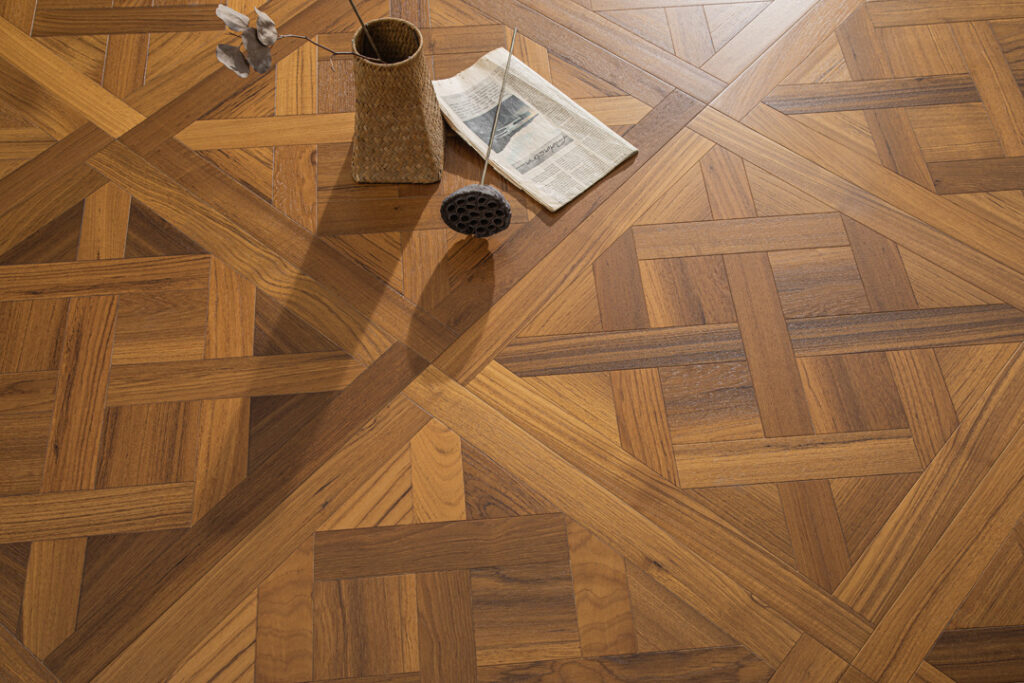
Proper humidity resistance testing ensures imported parquet flooring maintains dimensional stability and performance in varying environmental conditions, protecting your investment against moisture-related failures.
Humidity resistance represents a critical performance characteristic for parquet flooring, particularly when materials are transitioning between different climate zones from manufacturing in China to installation in European markets. For B2B buyers, implementing comprehensive testing protocols verifies that parquet products will withstand the specific humidity conditions of their target markets without compromising structural integrity or aesthetic appearance. Understanding both standardized testing methodologies and practical assessment approaches enables importers to make informed decisions and mitigate risks associated with moisture-related flooring failures.
The complexity of wood’s hygroscopic nature requires sophisticated testing approaches that simulate real-world conditions while providing measurable, reproducible results. By establishing systematic humidity testing protocols throughout the procurement process, buyers can confidently specify parquet products that will perform reliably in their intended applications, whether in humidity-controlled commercial environments or seasonal residential settings.
Table of Contents
1.What humidity testing standards apply to parquet for Europe?
2.Can suppliers provide humidity test reports for their parquet?
3.How does European humidity affect Chinese parquet performance?
4.What treatments improve parquet humidity resistance?
What humidity testing standards apply to parquet for Europe?
European markets employ specific standardized testing methodologies to evaluate parquet humidity resistance, providing consistent benchmarks for product performance comparison and compliance verification.
International Standard Framework
The European standardization system includes several key protocols for assessing parquet performance under humidity variation. EN 1910 specifies methods for determining dimensional changes in parquet under varying humidity conditions, measuring width, length, and thickness variations after exposure to precisely controlled humidity cycles. EN 13226 establishes testing parameters for solid wood parquet elements, including humidity resistance requirements for different wood species and construction types. EN 14342 provides comprehensive testing frameworks for wood flooring, incorporating humidity testing protocols that simulate real-world conditions from manufacturing through installation and service life. ISO 24334 offers international testing methodology for determining dimensional stability following humidity variation, creating globally comparable data sets. Additionally, country-specific adaptations sometimes modify these standards to address regional climate considerations, particularly in Nordic countries with extreme seasonal variations and Mediterranean regions with consistently high humidity levels.
Testing Methodology Implementation
Proper implementation of humidity testing standards requires precise environmental controls and measurement protocols. Conditioning phases precede testing, bringing samples to equilibrium moisture content under standardized conditions (typically 20°C ± 2°C and 65% ± 5% relative humidity) before testing commences. Cyclic testing subjects samples to repeated humidity variations between low (30% RH) and high (85% RH) extremes while maintaining constant temperature, simulating seasonal changes over compressed timeframes. Steady-state testing exposes samples to constant high humidity conditions (90% RH) for extended periods, assessing long-term performance in challenging environments. Measurement protocols employ precision instruments with accuracy to 0.1mm for dimensional changes and 0.1% for moisture content calculations, ensuring data reliability. Remett Floor’s quality assurance laboratory maintains full accreditation for standardized humidity testing, providing clients with certified test reports that validate product performance under European environmental conditions.
Can suppliers provide humidity test reports for their parquet?
Reputable Chinese manufacturers should provide comprehensive humidity test documentation, though the depth and credibility of these reports vary significantly based on testing methodologies and verification protocols.
Test Report Components and Verification
Authentic humidity test reports contain specific elements that validate testing thoroughness and result credibility. Laboratory accreditation information confirms testing facility qualifications, with preferred recognition including ISO/IEC 17025 certification and specific accreditation for construction product testing. Testing standard compliance clearly references the exact standard versions and methodologies employed, ensuring appropriate protocols for the specific product type and target market. Sample description completeness details product construction, wood species, surface treatments, and production batch information, enabling proper result interpretation and reproduction. Testing parameter documentation specifies temperature, humidity levels, exposure durations, and measurement intervals with precise numerical values rather than generalized descriptions. Result presentation includes both quantitative data (dimensional change percentages, moisture content measurements) and qualitative observations (surface checking, joint integrity, coating performance) with photographic documentation where appropriate.
Practical Evaluation of Test Reports
Critical assessment of provided test reports ensures their relevance and reliability for specific procurement decisions. Testing recency considerations favor reports dated within the previous 12 months, as manufacturing processes and material sources may change over time. Product configuration alignment verifies that tested samples match the specific construction, thickness, and treatment options being procured, not merely similar product lines. Statistical significance evaluation examines sample sizes, testing repetitions, and result consistency, with robust testing typically involving multiple samples from different production batches. Failure mode documentation in comprehensive reports includes not just passing results but detailed descriptions of how and when products failed under extreme conditions, providing valuable performance boundary information. Remett Floor maintains an extensive database of humidity test reports across our product range, with documentation updated quarterly and available for client review during the specification process.
How does European humidity affect Chinese parquet performance?
The transition from Chinese manufacturing environments to European service conditions creates specific humidity-related challenges that must be addressed through proper product engineering and acclimatization protocols.
Climate Adaptation Challenges
European humidity patterns differ significantly from typical Chinese manufacturing regions, creating specific performance considerations. Seasonal variation magnitude in Europe often exceeds 40% RH between winter heating seasons and summer months, particularly in continental climates, compared to more stable factory conditions. Heating system impact during European winters creates extremely low indoor humidity levels (often 20-30% RH) that differ dramatically from manufacturing conditions (typically 45-55% RH). Coastal region considerations in Northern and Western Europe expose parquet to both high ambient humidity and salt aerosol exposure, creating unique challenges beyond standard testing parameters. Building system interactions with modern energy-efficient construction featuring tight building envelopes and mechanical ventilation create different humidity profiles than the natural ventilation common in many Chinese manufacturing facilities. Regional variation understanding across Europe reveals dramatically different requirements, from Mediterranean coastal regions with consistently high humidity to Scandinavian interiors with extreme winter dryness.
Performance Failure Modes
Understanding specific humidity-related failure modes helps buyers identify potential product vulnerabilities before they manifest in installed flooring. Dimensional instability appears as gaps between planks during dry conditions or buckling and crowning during humid periods, indicating insufficient engineering for moisture movement. Surface coating failures manifest as microcracking in finishes when wood substrate movement exceeds coating elasticity, compromising protection and appearance. Adhesive system compromise occurs when humidity changes cause differential movement between parquet and subfloor, breaking adhesive bonds in engineered products. Structural integrity issues develop in solid wood parquet when internal stresses from moisture variation exceed wood’s strength, causing checking, splitting, or permanent deformation. Appearance degradation emerges through color changes, raised grain, or joint line telegraphing that diminishes aesthetic quality even when structural integrity remains intact. Remett Floor engineers products specifically for European humidity profiles, incorporating appropriate expansion margins, coating formulations, and construction techniques that accommodate expected moisture content variations.
What treatments improve parquet humidity resistance?
Multiple treatment approaches enhance parquet performance in variable humidity conditions, ranging from wood modification technologies to specialized coating systems and construction innovations.
Advanced Stabilization Technologies
Modern humidity resistance treatments employ sophisticated approaches that fundamentally improve wood’s performance characteristics. Thermal modification processes expose wood to high temperatures (180-215°C) in controlled atmospheric conditions, permanently reducing hygroscopicity by 40-60% while enhancing dimensional stability. Acetylation treatments chemically modify wood’s cellular structure through reaction with acetic anhydride, fundamentally changing moisture absorption characteristics while maintaining natural appearance. Multi-layer engineering constructs parquet with balanced cross-ply configurations that counteract wood’s anisotropic movement, dramatically improving dimensional stability compared to solid wood constructions. Nanotechnology coatings incorporate hydrophobic particles that create microscopic surface barriers without visible film build, maintaining wood’s tactile qualities while significantly reducing moisture exchange. Edge sealing systems apply specialized moisture-blocking compounds to tongue-and-groove components, protecting the most vulnerable moisture entry points in parquet installations.
Implementation Considerations and Performance Benefits
Selecting appropriate humidity resistance treatments requires balancing performance requirements with practical considerations. Treatment penetration depth varies significantly between surface applications and full-section modifications, with deeper penetration providing more comprehensive protection but at higher cost. Aesthetic impact assessment acknowledges that some treatments alter wood’s color or texture, which may influence design decisions despite performance benefits. Compatibility verification ensures treatments work harmoniously with adhesives, subfloor systems, and installation environments to prevent unexpected interactions. Lifecycle cost analysis evaluates treatment premiums against extended service life, reduced maintenance requirements, and decreased failure risk. Environmental profile consideration assesses the sustainability of treatment processes, particularly important for projects targeting green building certifications. Remett Floor offers graduated humidity resistance solutions across our product range, from enhanced engineered constructions for moderate humidity variations to fully thermally modified products for challenging environments like bathrooms and kitchens.
Conclusion
Implementing comprehensive humidity resistance testing for Chinese parquet imports provides essential verification that products will perform reliably in European environmental conditions. The most effective testing strategies combine standardized laboratory protocols with practical assessments that reflect specific project requirements and installation environments. By understanding applicable standards, critically evaluating test reports, recognizing regional humidity challenges, and specifying appropriate enhancement treatments, B2B buyers can significantly reduce moisture-related failure risks while ensuring long-term customer satisfaction with imported parquet flooring.
Remett Floor’s commitment to humidity performance begins with wood selection and continues through manufacturing, testing, and technical support, providing clients with products engineered specifically for European climate conditions. Our transparent testing documentation and technical guidance help clients make informed specification decisions that balance performance requirements with budget considerations.
Are you concerned about humidity performance in your next parquet project and seeking a supplier with verified stability testing and enhancement technologies?