
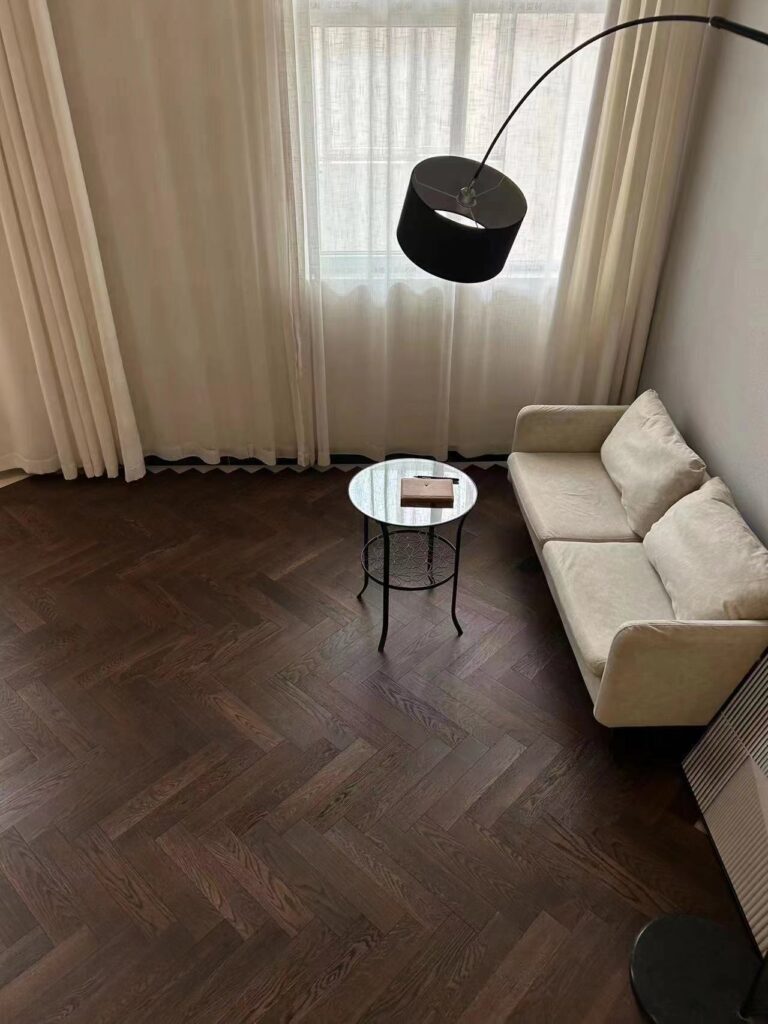
Verifying adhesion quality in engineered parquet ensures long-term performance and prevents costly delamination issues after installation.
Adhesion quality represents a fundamental performance characteristic in engineered parquet flooring, directly impacting product longevity, structural integrity, and resistance to environmental stresses. For B2B buyers importing from China, implementing comprehensive adhesion testing protocols provides critical assurance that the multilayer construction will maintain its integrity throughout the product’s service life. Understanding both standardized testing methodologies and practical assessment approaches enables importers to identify potential adhesion issues before they manifest as costly failures in installed flooring.
The complexity of modern adhesive systems and manufacturing processes requires sophisticated quality verification strategies that address various failure modes. By establishing systematic adhesion quality checks throughout the procurement process, buyers can confidently source engineered parquet that delivers reliable performance in diverse environmental conditions and usage scenarios.
Table of Contents
1.What adhesion standards apply to engineered parquet flooring?
2.How do I test layer adhesion in engineered parquet samples?
3.Can suppliers provide adhesion test certificates for parquet?
4.What factors affect long-term adhesion in parquet flooring?
What adhesion standards apply to engineered parquet flooring?
International standards establish specific adhesion requirements and testing methodologies for engineered parquet, providing objective benchmarks for quality assessment.
Standardized Testing Frameworks
The European standardization system includes comprehensive protocols for evaluating adhesion quality in multilayer parquet products. EN 13353 specifies requirements for solid wood panels and elements, including adhesion testing protocols for multilayer constructions. EN 314 (for plywood) is often referenced for parquet adhesion assessment, establishing minimum bond quality classifications and corresponding test methods. EN 14272 provides methods for determining bond quality through shear testing, with specific requirements for different wood species and adhesive types. Class 3 classification typically represents the minimum requirement for flooring applications, indicating resistance to repeated cycling through high humidity conditions. Custom manufacturer standards sometimes exceed basic regulatory requirements, particularly for products intended for challenging environments or premium market segments.
Testing Methodology Specifications
Proper adhesion assessment requires precise test procedures and equipment specifications. Shear testing protocols measure the force required to separate layers under specific loading conditions, with minimum requirements typically ranging from 1.0-1.5 N/mm² depending on wood density and construction. Boiling water testing subjects samples to extreme conditions, requiring maintained adhesion after specified boiling and drying cycles. Climate cycling tests evaluate adhesion performance through repeated exposure to varying temperature and humidity conditions. Sample preparation requirements specify conditioning parameters, cutting methods, and testing speeds that significantly impact results. Failure mode analysis categorizes results based on whether failure occurs in the adhesive line, wood substrate, or as a mixed failure. Remett Floor’s quality assurance laboratory maintains full accreditation for standardized adhesion testing, providing clients with certified test reports that validate product performance against international standards.
How do I test layer adhesion in engineered parquet samples?
Practical adhesion testing employs both standardized laboratory methods and field-appropriate techniques that provide reliable quality assessment.
Laboratory Testing Protocols
Comprehensive adhesion evaluation requires specialized equipment and controlled testing conditions. Tensile shear testing utilizes universal testing machines to apply precisely controlled forces to prepared samples, generating quantitative adhesion strength data. Delamination testing measures resistance to layer separation after water immersion or boiling, assessing adhesive performance under extreme moisture exposure. Peel testing evaluates adhesion strength at specific interfaces, particularly relevant for products with veneer surfaces or decorative layers. Cross-cut testing provides rapid qualitative assessment through standardized cutting and tape removal procedures. Microscopic examination analyzes adhesive penetration and distribution at the bond line, identifying potential manufacturing inconsistencies.
Field Testing Approaches
Practical adhesion assessment methods provide valuable verification when laboratory testing is not feasible. Manual inspection techniques involve careful examination of sample edges for gaps, inconsistencies, or other visual indicators of adhesion problems. Tap testing uses acoustic assessment to identify potential delamination through sound variation when striking the surface. Sample destruction testing manually attempts to separate layers at sample edges, providing qualitative adhesion assessment. Environmental exposure testing subjects samples to real-world conditions before adhesion assessment. Comparative testing evaluates multiple suppliers’ products using identical methods to establish relative performance. Remett Floor provides clients with comprehensive adhesion test reports while also supporting practical field verification methods that confirm laboratory findings through accessible assessment techniques.
Can suppliers provide adhesion test certificates for parquet?
Reputable manufacturers should provide comprehensive adhesion test documentation, though the credibility and usefulness of these certificates vary significantly.
Certificate Components and Verification
Authentic adhesion test certificates contain specific elements that validate testing thoroughness and result reliability. Laboratory accreditation information confirms testing facility qualifications, with preferred recognition including ISO/IEC 17025 certification with specific scope for adhesion testing. Testing standard compliance clearly references the exact standard versions and methodologies employed, ensuring appropriate protocols for the specific product type. Sample identification completeness details product construction, wood species, adhesive type, and production batch information. Testing parameter documentation specifies conditioning environments, testing speeds, sample dimensions, and equipment calibration dates. Result presentation includes both quantitative data (strength values, failure loads) and qualitative observations (failure mode descriptions, visual assessments).
Practical Certificate Evaluation
Critical assessment of provided adhesion certificates ensures their relevance and reliability for procurement decisions. Testing frequency considerations favor suppliers who conduct regular adhesion testing rather than relying on occasional or historic data. Product configuration alignment verifies that tested samples match the specific construction, thickness, and adhesive systems being procured. Statistical significance evaluation examines sample sizes, testing repetitions, and result consistency across multiple production batches. Failure mode documentation in comprehensive reports includes analysis of where and how failures occurred, providing insights into potential improvement areas. Historical performance correlation compares certificate results with field performance data from previous installations. Remett Floor maintains comprehensive adhesion testing documentation with regular updates and historical performance data that demonstrates consistent adhesion quality across production batches.
What factors affect long-term adhesion in parquet flooring?
Multiple factors influence adhesion performance over time, requiring consideration during both manufacturing and product specification.
Manufacturing Influences
Production processes and material selections fundamentally determine long-term adhesion performance. Adhesive selection criteria consider moisture resistance, flexibility, compatibility with specific wood species, and long-term aging characteristics. Wood moisture content management ensures optimal levels during pressing (typically 6-10% depending on species) to facilitate proper adhesive penetration without causing dimensional stress. Surface preparation quality affects bond formation, requiring properly planed surfaces with consistent roughness and cleanliness. Pressing parameters optimization balances temperature, pressure, and time to achieve complete curing without adhesive over-penetration or thermal degradation. Adhesive application control maintains consistent spread rates and distribution patterns to ensure uniform bond lines.
Environmental and Usage Factors
Service conditions and installation practices significantly impact long-term adhesion performance. Moisture exposure management addresses both ambient humidity fluctuations and potential liquid water exposure through proper installation and maintenance. Thermal cycling resistance ensures adhesion maintains integrity through normal temperature variations in heated floor applications. Mechanical stress accommodation allows the adhesive bond to withstand normal foot traffic and furniture loads without progressive failure. Chemical compatibility considers potential interactions with cleaning products, underlayments, or subfloor treatments. Installation condition appropriateness ensures proper subfloor preparation, adhesive curing environments, and acclimatization protocols. Remett Floor engineers products with consideration for all these factors, selecting adhesive systems and manufacturing parameters that ensure long-term adhesion performance in the specific environmental conditions of target markets.
Conclusion
Implementing comprehensive adhesion quality verification for engineered parquet imports provides essential assurance of long-term performance and durability. The most effective adhesion management strategies combine standardized laboratory testing with practical field assessment, thorough documentation review, and understanding of the factors influencing long-term performance. By establishing systematic verification protocols and working with manufacturers who employ advanced adhesion technologies and rigorous process controls, B2B buyers can confidently source engineered parquet that maintains structural integrity throughout its service life.
Remett Floor’s commitment to adhesion quality begins with material selection and continues through advanced manufacturing processes and comprehensive quality verification. Our technical expertise in adhesive technology and multilayer construction ensures clients receive products with reliable adhesion performance that withstands the test of time and environmental challenges.
Are you evaluating adhesion quality requirements for your next engineered parquet project and seeking a supplier with verified manufacturing processes and comprehensive testing documentation?