
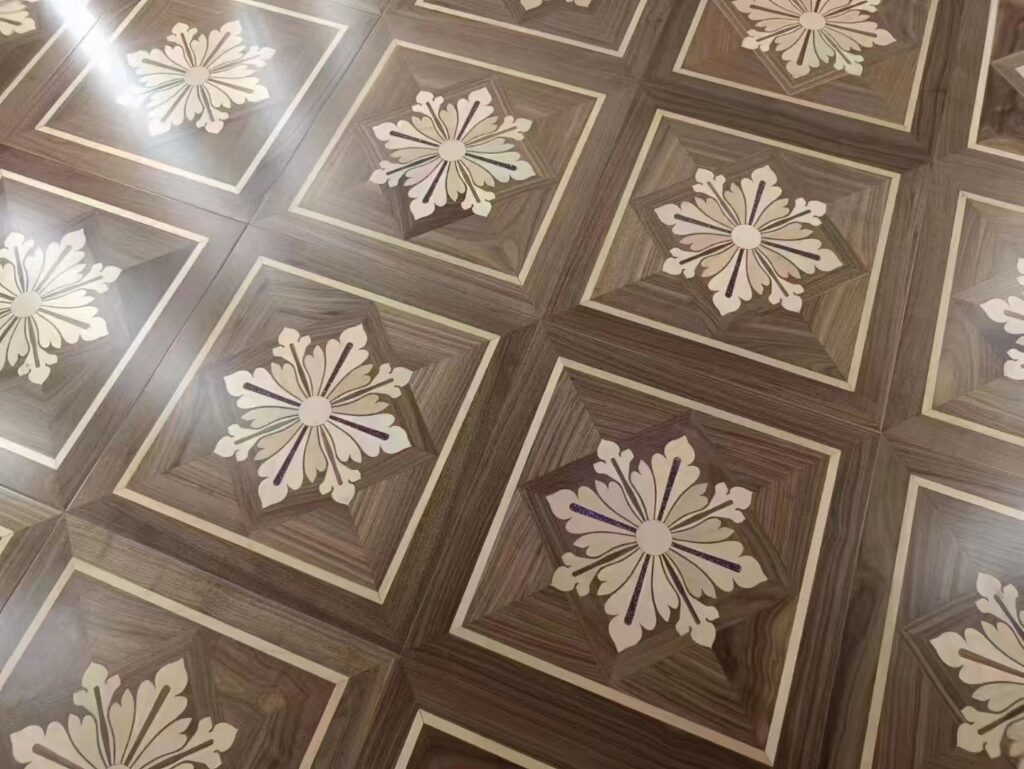
Advanced manufacturing capabilities enable Chinese suppliers to engineer parquet flooring with specialized performance characteristics that meet specific commercial and residential requirements.
The evolution of parquet manufacturing technologies has transformed Chinese suppliers from basic producers to innovative partners capable of delivering flooring with engineered performance enhancements. For B2B buyers in architectural specification, hospitality, and commercial development, these special features represent opportunities to address specific project challenges while maintaining the aesthetic appeal of genuine wood flooring. Understanding available options and their technical implementation helps procurement professionals make informed decisions that balance performance requirements with budget considerations.
Modern Chinese parquet manufacturers utilize sophisticated material science and production techniques to create flooring products that exceed conventional performance parameters. From moisture resistance for kitchen and bathroom applications to sound reduction for multi-story buildings, these specialized capabilities continue to expand, offering designers and specifiers increasingly sophisticated solutions.
Table of Contents
Is water-resistant parquet available from Chinese manufacturers?
Can suppliers produce parquet with sound-dampening properties?
What’s the cost difference for specialty feature parquet?
How do I test special feature performance in parquet samples?
Is water-resistant parquet available from Chinese manufacturers?
Water-resistant parquet represents one of the most sought-after specialty features, with Chinese manufacturers offering multiple technological approaches to enhance moisture performance.
Advanced Water-Resistance Technologies
Chinese manufacturers have developed sophisticated methods for creating parquet suitable for high-moisture environments. Multi-layer stabilization systems incorporate moisture-blocking layers between wood veneers, significantly reducing expansion and contraction in humid conditions. Edge-sealing technologies using specialized resins and application methods create microscopic barriers at joint areas where moisture typically infiltrates. Modified wood techniques through thermal and chemical treatments fundamentally alter wood’s cellular structure to reduce water absorption by up to 60% compared to untreated wood. Enhanced coating systems utilizing UV-cured polyurethane with hydrophobic properties create impervious surface barriers while maintaining wood’s natural appearance.
Technical Implementation and Applications
The practical implementation of water-resistant technologies varies by manufacturer capability and intended application. Bathroom and kitchen applications typically require the highest level of water resistance, achieved through combined edge-sealing and surface treatment technologies. Basement and ground-floor installations benefit from full-stabilization systems that protect against both ambient humidity and potential moisture vapor transmission. Commercial food service areas necessitate non-porous surfaces achieved through specialized coating systems that meet hygiene requirements. Climate-challenged regions with high humidity benefit from modified wood technologies that maintain dimensional stability despite significant seasonal humidity fluctuations. Remett Floor has invested significantly in water-resistant technologies, offering multiple solution tiers to match specific project requirements and budget parameters.
Can suppliers produce parquet with sound-dampening properties?
Acoustic performance has become increasingly important in multi-story construction, with Chinese manufacturers developing specialized parquet systems to address impact and airborne sound transmission.
Sound-Reduction Engineering Approaches
Multiple technological approaches exist for enhancing parquet’s acoustic performance. Integrated underlayment systems combine the finished parquet with specialized sound-absorbing backing materials in factory-controlled conditions. Mass-loaded vinyl layers incorporated within engineered constructions add mass to block low-frequency sound transmission while maintaining floor height. Resilient interlayers using cork, rubber, or specialized polymers disrupt sound vibration pathways between flooring and subfloor. Floating floor engineering optimizes tongue-and-groove systems to minimize sound transmission while maintaining structural integrity. Impact improvement modifications alter surface characteristics to reduce footfall and impact noise at the source.
Performance Standards and Applications
Different applications require specific acoustic performance characteristics. Multi-residential buildings typically require impact insulation class (IIC) ratings of 50+ and sound transmission class (STC) ratings of 55+ to meet building code requirements. Hospitality projects often specify enhanced acoustic performance in guest rooms, with particular attention to reducing footfall and furniture movement sounds. Office environments benefit from parquet systems that reduce both impact noise and airborne sound transmission between spaces. Educational and healthcare facilities require specialized acoustic properties that address both noise reduction and indoor environmental quality. Remett Floor’s acoustic parquet systems undergo rigorous testing to verify performance claims, with third-party certification available to validate compliance with international building standards.
What’s the cost difference for specialty feature parquet?
Special features inevitably affect parquet pricing, though the premium varies significantly based on technology complexity, material requirements, and production scale.
Cost Structure Analysis
Specialty features influence multiple aspects of parquet production costs. Raw material premiums for specialized components including proprietary coatings, composite layers, and acoustic materials typically add 15-30% to base material costs. Manufacturing process requirements for specialized features often involve additional production steps, slower processing speeds, and specialized equipment, increasing labor and overhead allocation by 20-40%. Research and development investment for advanced features gets amortized across production volumes, typically adding 5-15% to product costs depending on technology exclusivity. Quality assurance requirements for specialty features necessitate more extensive testing and inspection protocols, adding 3-8% to manufacturing costs. Certification and testing expenses for performance validation by third-party laboratories represent ongoing costs that must be incorporated into pricing.
Value-Based Pricing Considerations
The pricing premium for specialty features should be evaluated against the value they deliver in specific applications. Problem-solving value when features address specific project challenges often justifies significant premiums by avoiding more expensive alternative solutions. Lifecycle cost reductions through extended product lifespan or reduced maintenance requirements can offset initial price premiums over time. Project value enhancement through improved occupant comfort, acoustic privacy, or design flexibility often justifies feature premiums in competitive real estate markets. Warranty and risk reduction benefits of factory-integrated specialty features compared to field-applied solutions provide value through reduced installation risk and longer coverage periods. Remett Floor maintains transparent pricing models that clearly identify feature-specific premiums, enabling clients to make informed value-based decisions about specialty feature selection.
How do I test special feature performance in parquet samples?
Validating specialty feature performance requires structured testing protocols that simulate real-world conditions and verify manufacturer claims before full production commitment.
Performance Verification Methodologies
Different specialty features require specific testing approaches to confirm performance characteristics. Water resistance testing should include both surface exposure and edge immersion tests conducted over extended periods, with precise moisture content measurements before and after testing. Acoustic performance validation requires specialized laboratory equipment to measure impact insulation and sound transmission characteristics according to ASTM or ISO standards. Wear resistance verification utilizes standardized abrasion testing equipment with precise measurement of surface deterioration after defined test cycles. Chemical resistance assessment involves exposure to common household and commercial chemicals with evaluation of surface effects. Dimensional stability testing subjects samples to extreme humidity and temperature cycling while monitoring dimensional changes.
Practical Testing Implementation
Implementing effective performance testing within project timelines requires strategic approaches. Pre-production sampling should be specified to include full-construction samples rather than face veneer representations alone. Independent laboratory testing provides objective performance validation, particularly for critical applications where manufacturer self-certification carries insufficient assurance. Real-world simulation through targeted testing that replicates specific project conditions often provides more relevant data than standardized tests alone. Comparative testing evaluating multiple suppliers’ products using identical protocols creates objective performance comparisons. Documentation requirements should include detailed test reports with methodology descriptions, measurement data, and clear pass/fail criteria. Remett Floor facilitates comprehensive performance testing through our technical support program, providing clients with extensive pre-production sample materials and supporting test data from recognized laboratories.
Conclusion
The capacity of Chinese suppliers to produce parquet with specialized performance features has expanded dramatically, offering B2B buyers sophisticated solutions for challenging applications. From moisture resistance that enables wood flooring in traditionally unsuitable environments to acoustic performance that meets stringent building code requirements, these specialty features significantly expand parquet’s application possibilities. The most successful specialty feature implementations result from collaborative partnerships between knowledgeable buyers and technically capable manufacturers who understand both performance requirements and practical installation considerations.
Remett Floor’s investment in specialty feature technologies reflects our commitment to providing clients with innovative flooring solutions that address real-world performance challenges. Our technical expertise helps clients navigate the selection and validation of specialty features, ensuring appropriate solutions for specific applications while maintaining value optimization.
Are you evaluating parquet with special performance features for your next project and seeking a supplier with the technical capability to deliver verified performance?